Archives for category: Coaching

IMG_7745

At our monthly men’s group meeting this week one of our members remarked how quickly time is passing. Now in his sandwich years his life overflows with the joys and duties of spouse, father and son. Like many he struggles to balance all of this with grace, while at the same time responding to the nagging tug that wonders if there is something more to satisfy his soul’s longing.

More than twenty years his senior, I smiled to myself, having traversed much of the ground that lies before him – not that his journey will be similar to mine, but that he will continue to formulate his answers to the questions that life brings to each of us. For me the focus is the closing window of time remaining and the fear that it will slip away unattended.

I continue to ask myself two questions. Am I doing my soul’s work? Am I doing it with the people who love, challenge and encourage me? My joy and blessing is that I am able to answer YES to both questions.

Do you answer YES? If not, an opportunity invites you to take the first step now to move toward your YES.

As my friend spoke, the refrain of a favorite song visited me with its lyrical counsel about time, fear and friendship. It is Sandy Denny’s signature song also covered by Judy Collins.

And I am not alone, while my love is near me. 

I know it will be so until it’s time to go.

So come the storms of winter and then the birds in spring again

I have no fear of time.

For who know where time goes?

Who knows where the time goes?
 

IMG_7745

Ever think about how to get the knowledge you seek? Two guidelines may help. Be clear about the information you want and be mindful that the way you ask questions may determine the results you get.

If you seek facts, a direct question will yield a verifiable answer – what is the voting age? If you ask a closed-ended question – did you vote? – the response may be clear and quick (yes or no) but may end the conversation.

Inquiry is important to expanding our lives, and open-ended questions serve that purpose best. The following question stimulates a variety of possibilities: What would it take to maximize voting participation?

My sister introduced me to an organization that trains people from all walks of life to ask better questions and participate more effectively in decisions that affect them. The Right Questions Institute has developed a question formulation process that works with schools, community organizations, health providers, businesses and families. You can learn more at their website.

Some questions can lead us into the most important answers we seek in life, inquiries of the heart – why am I here? what is happiness? how can I make a difference? For the answers to these life-defining questions Stephen Mitchell counsels us well in his translation of advice to a young poet from Rainer Maria Rilke.

Have patience with everything unresolved in your heart and try to love the questions themselves… Don’t search for the answers, which could not be given to you now, because you would not be able to live them. And the point is, to live everything. Live the questions now. Perhaps then, someday far in the future you will gradually, without even noticing it, live your way into the answer.


IMG_7745

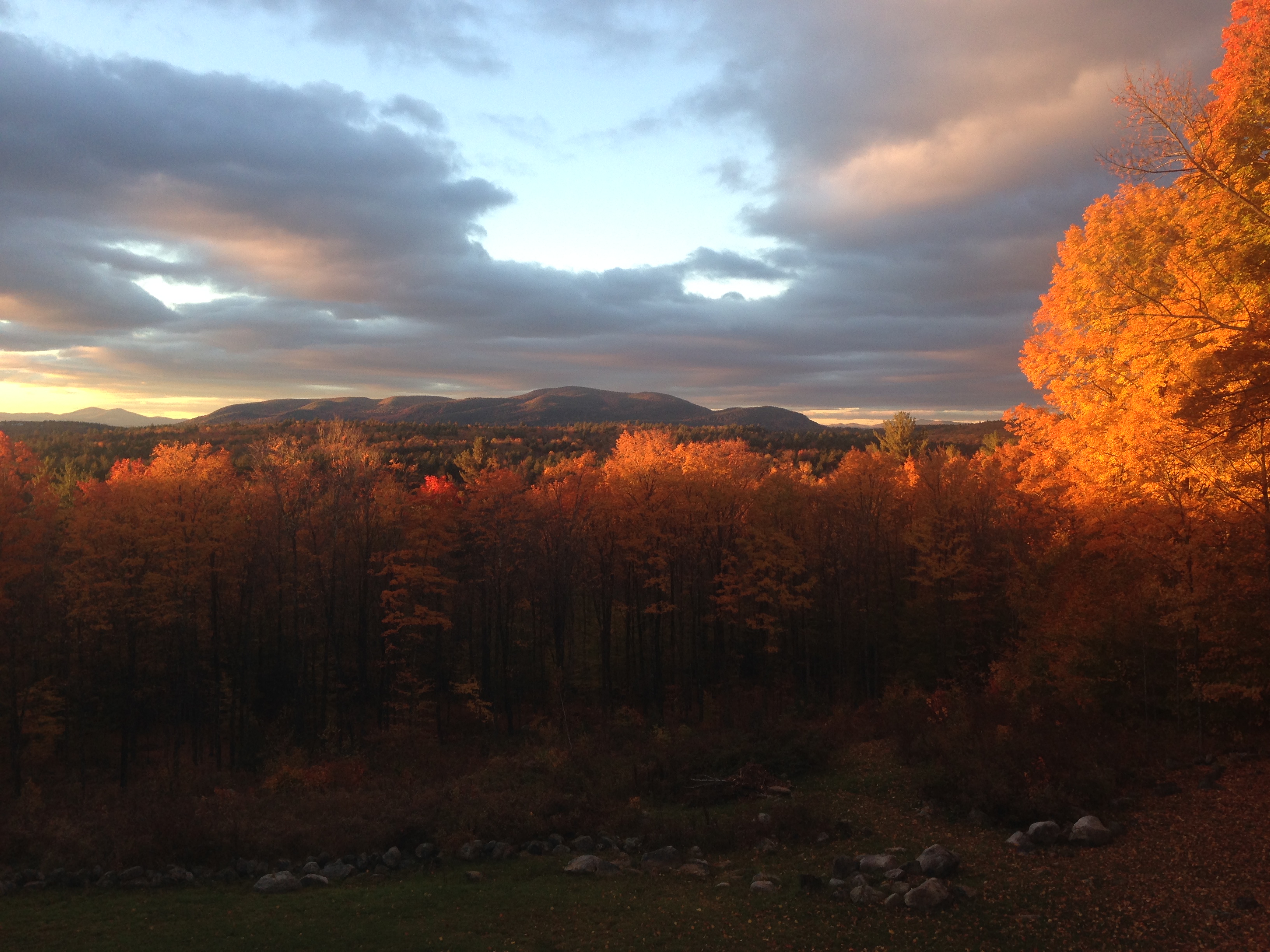
Those of us who live close to the land are graced with many blessings. Moments like the one captured in the photo below are an example – an October sunrise from the ridge where we live.

Many gifts of the earth are essential to our survival – the air we breathe, the water we drink, the food we consume. The aesthetic beauty of the earth expands our hearts; the sense of place grounds our spirits.

A poem by David Wagoner from the anthology Life Prayers offers another grace note of bounty from the earth. Have you ever been turned around in the woods, maybe even lost for a moment? Ever been turned around a bit in your life, having lost your direction? Perhaps you are facing such a time today.

For most of us finding our way (again) begins with being fully present to the moment and its messengers, “to know it and be known.”

Stand still. The trees ahead and the bushes beside you are not lost. Where ever you are is called HERE. And you must treat it as a powerful stranger. Must ask permission to know it and be known.

The forest breathes. Listen. It answers, I have made this place around you. If you leave it, you may come back again, saying, HERE. No two trees are the same to Raven. No two branches are the same to wren.

If what tree or bush does is lost on you, you are surely lost. Stand still. The forest knows where you are. You must let it find you.

October Sunrise on the Ridge (2015) IMG_0306

IMG_7745

Our minds are magnificent liberators. They are also bedeviling oppressors. Much suffering in life is linked to the entrapment of our minds, as we become attached to the pleasurable highs and find the oppressive lows aversive. How can we mitigate the debilitating messages and harness our minds for happiness?

I am working on three strategies. The first is to interrupt the chatter. When the messages seem to be high jacking my thoughts or feelings, I find that a momentary deep breath or a change of activity provides a sufficient time-out to break through the static and allow me to refocus.

The second strategy involves the decision to create a new routine. Research on the brain is finding that a significant percentage of our daily behavior (40%) is habitual. The more the brain can relegate its management of repetitive situations to habit, the more it devotes its energy to paying attention and solving new problems. Two helpful resources for this are Charles Duhigg’s The Power of Habit and Daniel Goleman’s Focus.

For the past several years I have begun each day with a period of yoga, reading and sitting meditation. That routine has helped me diminish old patterns and pay attention to new potential.

The last strategy is the most difficult to do: let go of outcomes. That isn’t to say let go of dreams, setting goals and advocating for our beliefs. It means that despite our best planning, our most committed effort and our most devoted advocacy, results may turn out differently. Rather than bemoan the loss of what we had envisioned, we have the opportunity to open ourselves to possibilities we had never considered.

Taming the mind is both a daily opportunity and challenge. What strategies are working for you?


IMG_7745

For most of us work dominates our waking hours. It defines who we are and to whom and what we belong. Work is much more than a job that provides a livelihood, although for the fortunate among us the labor that brings out our best and allows us to contribute most to others also supports us.

Work looms especially large in retirement as we face the loss of it. We leave behind decades of identifying ourselves by what we do and others’ recognition of us. Whatever we have professed to this point, the work of living shifts.

The work of living is the key, for our work in this sense does not change. Our most recent job may be ending, but the task of delineating ourselves by the way we create and share meaning does not. There is no stepping down from the occupation of living. In fact, having more time enables us to explore and create new ways to express that unique set of gifts that is our vocation.

In the example of creating poetry David Whyte inspires us to pay attention to the arriving breeze of revelation, the meaning that is our work to discover for each of the days remaining to us.

THE LIGHTEST TOUCH

Good poetry begins with the lightest touch, a breeze arriving from nowhere, a whispered healing arrival, a word in your ear, a settling into things, then like a hand in the dark it arrests your whole body, steeling you for revelation.

In the silence that follows a great line you can feel Lazarus deep inside even the laziest, most deathly afraid part of you, lift up his hands and walk toward the light.


IMG_7745

Perhaps the greatest gift we can give another person is our undivided attention. Being fully present means listening with every sense we have. It means creating a safe container to hold and honor the other person’s vulnerability in sharing.

The gift of presence is easier to describe than to do, much less sustain. Care givers are particularly vulnerable. Whether they are professionals like doctors, nurses, first-responders, therapists, etc. or family members tending children, elders or those with special needs, care givers face two challenges.

Like all of us they must manage the endless ringing bell of arrivals to our in-box, the daily barrage of data that lure our brains to sort and file. Distractions are a hazard to holding presence.

Having coached many of them, I have also found that care givers have a proclivity for self-neglect. In his meditation guide, Moment by Moment: The Art and Practice of Mindfulness, Jerry Braza quotes a nurse whose favorite slogan is “I can’t do you if I don’t do me.”

What does it mean to “do me?” How we answer will differ for each of us, but our answers will have the same goal: the more we can be present to ourselves, the more effective we will be in being available to others.

We can do three things: be mindful of our own needs, give ourselves permission to meet them and make the time required. When we recharge our batteries with rest, exercise and spiritual practice; when we expand our minds, cultivate the relationships that are most dear to us and have fun, we are better prepared to extend and sustain the gift of presence.

What is one step you can take today that will help you most to “do me?”

IMG_7745

Which is more effective in solving difficult problems, a group of intellectual superstars or a team of individuals who focus on building relationships? In his latest blog Alan Seale shares the answer.

Seeking to understand what makes some groups more successful and productive than others, researchers at MIT brought together hundreds of volunteers, put them in groups and gave them very difficult problems to solve. As was expected some were more successful than others.

Contrary to expectations, the highest achieving groups were not those made up of “superstars’ or people with exceptionally high IQs. Instead, the research showed the key to success was the social interconnectedness of the people within the group.

These findings are congruent with Alan’s own work on transformational presence and leadership, and I urge you to visit his website to learn more about his teaching and coaching. Being present to another person creates a container of safety that invites sharing and taps talent.

Embedded in Alan’s blog is a TED talk presented by entrepreneur and thought leader, Margaret Heffernan. In the talk she describes the MIT studies in greater detail and makes a compelling case for how building social capital leverages organizational effectiveness.

Describing the successful groups in the study, she used a phrase that sticks with me still: Bringing out the best in others is how they found the best in themselves. Given the fissures in relationships today, be they between two individuals seeking to strengthen their partnership or tribal adversaries who must learn to coexist, this is a compelling bridge to build.

Who or what brings out the best in you? When and how do you bring out the best in others?

IMG_7745

Each of us belongs to many groups; among them are families, faith communities, professional networks, political parties, tribes of origin and nations. Some are given and some we choose. They are circles whom we influence and who influence us.

At their finest these groups recognize and affirm who we are. They bring out our best. They protect us and advocate on our behalf. They celebrate collective milestones and individual life passages.

Certainly, the power of groups can also have a dark side, but those dynamics are themes for another post. Today I celebrate the gifts received from one particular group.

Last September I retired from coaching students in a two-year certification program. Created by Melisa Pearce with help from Peggy and me, the Equine Gestalt Coaching Method enables practitioners to partner with horses in helping clients break through to achieve their full potential in life. The students and graduates of the program are a professional community.

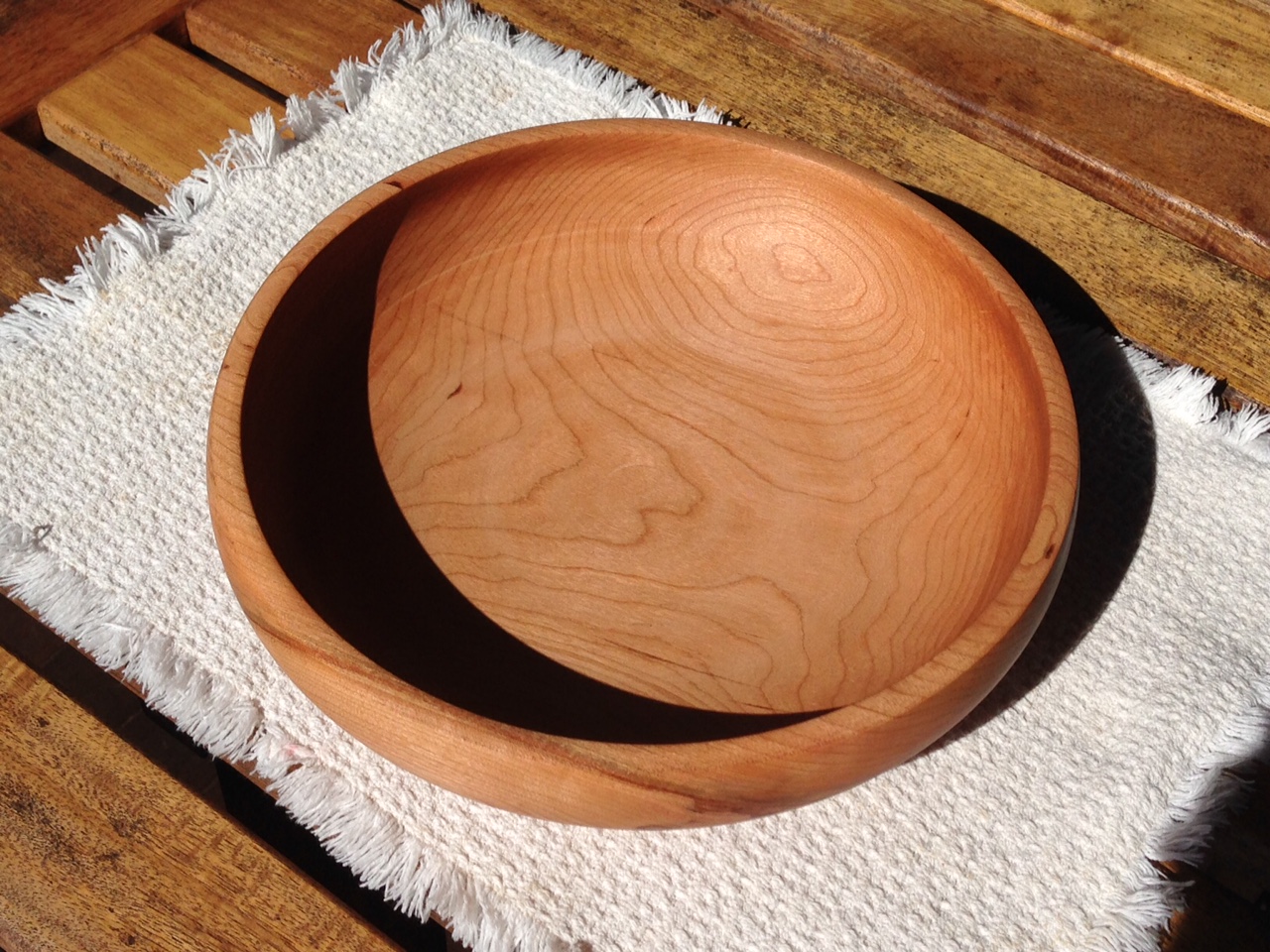
Of the many gifts I have received from this herd – including appreciation of equine wisdom, lessons in leadership and follower-ship, trust, sharing, friendship, personal growth and professional challenge – I share one today that has enabled me to develop a latent interest. Thanks to their generosity I have been able to attend a series of workshops to learn skills associated with wood-turning. I have just completed my last session which resulted in the cherry bowl pictured below.

I share it as an expression of gratitude to the EGCM herd. For me it represents the challenge, beauty and nuance of any human endeavor inspired and nurtured by a special community.

What are the gifts that you contribute to and receive from your circles of influence?

Cherry Bowl (2) 080515 IMG_0226

IMG_7745

The collapse of a highway bridge in California this week is a compelling image. Our failure to rebuild our crumbling infrastructure mirrors our reluctance to invest in strengthening the connections that link us inextricably to each other and all life on the planet.

Our willingness to permit the chasms of commerce, class, race, religion and politics to divide is dooming us all. Can we build bridges to withstand the forces of human nature as well as Mother Nature?

We hear the naysayers’ answer daily. Those of us who would answer YES can begin by first tending the geography of our inner landscape.

Research on the brain is confirming what the experience of millennia has taught us about ourselves. Our ability first to survive and then to thrive results from the dance between our emotions and our cognition, our “heart” and “head.” Our ability to balance the two is key. Too much feeling without a rational reality check leads us astray and vice versa.

The good news is that our literal life-giving breath provides a transformative tool. Athletes, artists, counselors and those who meditate know this well. Training expands aerobic capacity and improves our health. Deep breathing interrupts cycles of fear, reducing stress. Breathing with focus and gentle intention creates a channel of mindfulness between head and heart, a conduit that brings the wisdom of each to the other.

Gaining perspective, balance and control of our own being is the first step in cultivating life-generating relationships with others. In words from Thich Nhat Hanh, Our breath is our bridge from our body to our mind.

An informed heart is our most powerful ally in spreading compassion. May your mindful breathing today launch ripples of peace within and outward to all whom you meet.

Bob MacArthur

A dose of anxiety can help us achieve our peak performance, but too much stress can immobilize us and endanger our health. Think of toxic conditions at work, conflicts in relationships, acting to please others and over-committing ourselves. How do we find the balance?

Our body has an amazing capacity to regulate itself in seeking balance, homeostasis. Think of how it maintains its core temperature. When cold, it shivers to generate warmth. When hot, it sweats to dissipate heat. These are involuntary responses. If we pay attention, we can use them as barometers of balance and health.

For example, when our brain senses we are in peril, it floods our body with adrenaline, cortisol and other hormones that mobilize us to fight or flee. We can feel our heart pound and our pulse race in preparation. However, if the real or perceived danger is sustained and our emergency response chemicals persist in our body, they can damage our heart and weaken our immune system. At some point symptoms of dis-ease will surface in discomfort, pain or lumps.

We compose our lives with the decisions we make. Becoming aware of our body’s signals to us is the first choice in regaining equilibrium. Other decisions include seeking help in resolving intractable conflicts and declining when asked to add one more commitment to an over-extended schedule. Choosing to make time for self-care is essential – walk, read, ride, practice yoga, meditate.

There is a Buddhist invocation that reminds us of the goal to seek balance in living. I have adopted a version of it as an aspiration for composing my life. It is simple but full of truths to ponder.

May I dwell in the great equanimity free from attachment, aversion, aggression and prejudice.