IMG_7745

Living life deliberately and leading others effectively depend on doing what matters most. Each of us defines this differently, which accounts for our unique contributions to the world.

At the heart of what is most important to each of us are some bed rock principles that serve as an internal GPS to keep us oriented in our daily dance of living. The same is true of organizations. Leaders who are focused on what matters most cultivate cultural norms that enable their teams to deliver with congruence the value promised to customers.

As a coach I work with individuals and organizations that are momentarily overwhelmed or stymied. Often, these are busy clients for whom unforeseen events land on an already extended schedule. I dare say it happens to each of us at some point. The result is a crisis, and in the fog of the moment we lose our bearings.

I have found that one of the most effective tactics is to have clients revisit and clarify their values. It sounds so basic, and it is. At the same time, it is very effective in breaking through the muddle to focus on the essentials. When life gets too complex, we need a way to simplify, to return to basics.

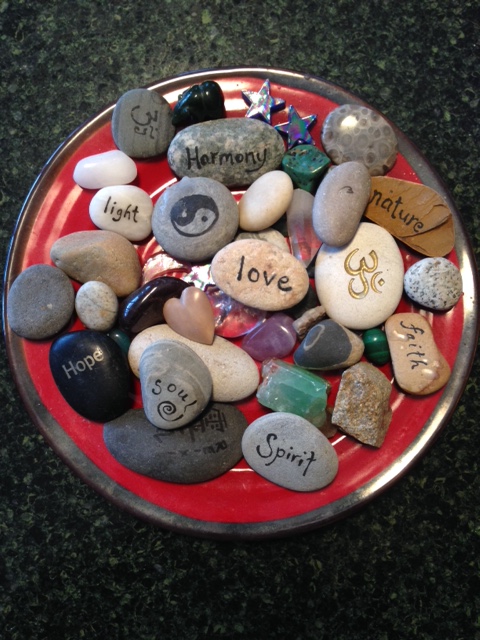
For each of us there are 3-4 core values that matter most in our lives. If we are momentarily overwhelmed or seeking clarity in making an important decision, reclaiming and reaffirming them can provide a lens that helps us see our way through.

What are the four values that matter most to you?

IMG_7745

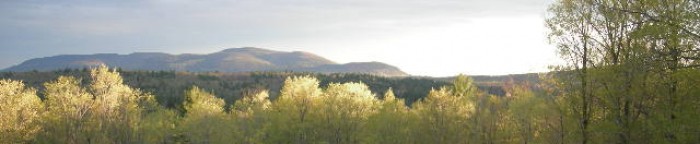
Three days of rain this week jammed the creek beds. Tumbling over rocks and around fallen branches, water scoured our hillside, singing like resonant white noise. Today the sun has returned, the creeks have subsided, the earth is refreshed and we are gifted a metaphor.

Like boulders in a rushing stream, obstacles in our path interrupt the course of our lives, forcing us to choose our way. If we suspend our judgment and open ourselves to explore them, these impediments can help us reframe our situation and discover new possibilities. We may find a lane through our impasse, a new direction we had not considered or a harmonious resolution.

Responding to last week’s post, which encouraged us to seek the hidden jewel in adversity, a colleague from years ago contacted me. Mission driven, deeply dedicated and very competent, she has been dealt some significant burdens. We conversed. Talking through her dilemmas enabled her to gain clarity about options she was considering. For me the opportunity to rekindle a friendship and hold space for her to regain her bearings was gratifying.

Is there something blocking the flow of your life right now? A dynamic in an important relationship? A crossroad at work? A perplexing situation that you don’t know how to resolve? A pithy poem by Wendell Berry may help you embrace the possibilities on the other side of the obstruction.

It may be that when we no longer know what to do,

We have come to our real work;

And that when we no longer know which way to go,

We have begun our real journey.

The mind that is not baffled is not employed.

The impeded stream is the one that sings.

Bob MacArthur

Her doctor found a lump. His boss fired him unceremoniously. At midlife she realized that in putting family first she had neglected other important parts of herself.

Episodes of loss of direction, health, livelihood or relationship – when the old ways are no longer available or no longer serve us – can literally be life changing. If we don’t let them overwhelm us, they can redirect us to a path that is more true and fulfilling.

Exiled by his brother, the duke in As You Like It reflects on his humiliation and new way of being. He concludes that the disheartening elements of his crisis

…are counsellors that feelingly persuade me what I am. Sweet are the uses of adversity; which like the toad, ugly and venomous, wears yet a precious jewel in his head. (Act II, Scene 1, 10-14)

In the lore of Shakespeare’s day the toad had venom associated with its ugliness. It also held healing power in its temple, the precious jewel of which the duke speaks.

What can we learn from the circumstances that challenge us to our core? Having been dealt a few setbacks in my life, I see how much those times served to persuade me who I am today.

Calamities provide the opportunity to re-imagine and redefine who we are and why we are here. They impel us to return to the basic questions of what brings us meaning and joy in life. Facing into these difficulties with a sense of inquiry can lead to new, forgotten or neglected answers. These are the jewels inherent in the anguish of crisis. We can discover them, if we choose.

What precious gems do you see for yourself in your times of adversity?

IMG_7745

Several times each day we face the question, where do I belong? Our answers define us, as the marketers of social media have learned from our clicks!

There are many levels of belonging. We inherit some like our family of origin or our cohort at school. We choose others like our relationships, livelihood, neighborhood, spirituality, political affiliations and many more.

What are the criteria we use when we choose to belong? For me feeling “at home” is a good indicator that encompasses four qualities – safe, affirming, congruent and stretching.

I am at home and seek to belong with people and situations where I feel safe physically and emotionally. I also choose to belong where I am recognized and appreciated for who I am, not only for the things I do effectively but my foibles and shortcomings as well. I was blessed that my family of origin provided those qualities. They have served as benchmarks throughout my life. I am also aware that for many folks their family of origin was not a safe and affirming zone.

My livelihood has been an unfolding journey with each employment bringing me closer to congruency with my vocation and core values. No doubt, beckoning curiosity has played a role – can I or can’t I? Also, integral to each job have been the challenges and acceptable risks that have stretched me to grow in understanding and competence.

I am aware of and grateful for my privilege of choosing to live and belong to those individuals, groups, places and causes that most reflect the world of my values.

Where do you choose to belong? What are your criteria? It might be instructive today to be aware of the answers you click in response.

Bob MacArthur

Friendship is one of life’s gifts. Too often in our busy-ness we may forget how important our friends are to us. May this post ring like a bell of mindfulness.

Friendship moves to the center of my awareness today, as Peggy and I prepare to join a group of companions next week. They are high school classmates and spouses. A couple of us were close as teenagers and have remained so throughout life. Most of us, however, shared the vacillating dramas of those years without much deeper contact and only reconnected at our 50th reunion five years ago. We have been journeying together ever since via phone and gatherings.

Next week we’ll spend three days in conversation, sightseeing, music, and mutual support. There will be laughter, good food and deep sharing. We’ll celebrate each other and fortify ourselves for today’s challenges and those that lie ahead.

The roots of the word companion come from the Latin, com (with) panis (bread). Literally and figuratively companions break bread together. Celebrated in the rituals of most religions and spiritual paths, meal fellowship nurtures both body and soul.

Bernie Taupin’s lyrics together with Elton John’s music capture these truths in their song Friends (1971).

It seems to me a crime that we should age. These fragile times should never slip us by.

A time you never can or shall erase, as friends together watch their childhood fly.

Making friends for all the world to see. Let the people know, you got what you need.

With a friend at hand you will see the light. If your friends are there, then everything’s all right.

Does one of your friends come to mind? Would a phone call, visit or email of gratitude be in order?


IMG_0158

During meditation this week these words from Pema Chodron grabbed me: “Only with equanimity can we see that everything that comes into our circle has come to teach us what we need to know.”

What came to mind for me were images from three intersecting circles. The first circle held searing pictures of racism from videos of killings, protests and violence across our land. They confronted me with how far we have to go to heal the deep wounds of slavery, and they raised many questions. Collectively do we have the will to create equality of opportunity? Can we secure justice in the oligarchy that our democracy has become?

The second circle is an outdoor amphitheater that seats 600 in one of the camps of the youth organization I led for several years. The memory of standing in that arena with a blazing fire at its center to speak or lead songs and cheers restores the hope of engaging young people in social change.

In those years we brought together urban, suburban and international youth to strengthen their understanding and appreciation of difference, tap into their idealism and advance their leadership skills to make a difference. Today many of them are advocates for equality and justice in metropolitan St. Louis, Dayton, Cincinnati and elsewhere.

Within the third circle reside the questions of if and how to engage racism at this stage of life when my white privilege allows me to choose not to. What are my obligations in retirement? Oriah Mountain Dreamer’s words ring with their challenge: “I want to know if you will stand in the centre of the fire with me and not shrink back.”

What is in your circle this week, and what is it here to teach you?

IMG_7745

We often use the phrase I changed my mind to explain a minor shift in behavior like switching our choice of entre at a restaurant. When is the last time you changed your mind about something important like your livelihood, your lifestyle or a relationship?

Part of my work in coaching is to help people break through an impasse that is blocking them. Most of us hit these walls when we are overwhelmed by too many to-dos, confused by conflicting demands, immobilized by opportunities or sometimes just stuck in a rut.

Whatever the reasons given, our way is usually blocked by a mindset. I’m too busy. I’m not good enough. I don’t deserve it. Do any of these ring true for you? If so, is it time to begin changing your mind about something important? Here are a couple of suggestions for starters.

A rut is a routine on steroids; a mindset is an attitude. You can begin to change both by replacing chunks of your daily routine. Start with a small step and build on it. If you spend 30-45 minutes on social media each day, replace 15 of those minutes searching websites, books or magazines for phrases or images that convey your vision of the change you wish to make.

Start a journal. Add a single entry each day – one quote or picture you have found that inspires you and moves your energy toward your vision. Keep it simple. One consistent action over the coming month will become a new routine.

As you gradually modify other routines, you will transform your attitude and the messages you tell yourself. Shifting your mindset can lead to changing your life.

Giving Tree IMG_0191

For her bed time story one night this week our six-year-old grandchild chose The Giving Tree. As is often true the simplicity of a child’s tale taps the complexity of an elder’s painfully acquired perspectives.

First published fifty years ago Shel Sliverstein’s story has been interpreted in a variety of ways from a parable of unconditional love to the “me” generation’s exploitive narcissism. (The boy takes everything – fruit, branches and trunk).

When I asked what she liked about the story, our granddaughter had two answers: the tree kept giving and giving and the boy kept getting older and older until all he wanted was to rest on the stump that remained.

The story offers several questions for our reflection. To what extent do we give? To what extent do we take? How do we receive?

Have we identified what it is that we have to give in life? Do we give freely without expecting anything in return? Do we give “it” all away because that may be safer than risking the request for reciprocity?

Do we take without considering consequences, oblivious that the day will come when there is nothing left to take, or, as those of us who are seniors fear, there is little more to give?

Do we take without appreciation? The boy never thanks the tree, although she takes joy from his childhood play in her branches and his periodic visits through the years.

After every gift the tree provides, the narrator reports: “And the tree was happy.” Was it that she was fulfilling her destiny? Was it her unwavering commitment to relationship? How open are we to receiving such bountiful grace?

IMG_0178 - Copy

This week our family celebrates Peggy’s birthday. With winter lingering the arrival of her special flower is delayed, but its significance is seldom absent whatever the month.

Daffodils have accompanied our life together, the gift of a Limeliters’ song some fifty years ago.

I do not have a mansion. I haven’t any land. Not one paper dollar to crinkle in my hand. But I can show you morning on a thousand hills, kiss you and give you seven daffodils.

I do not have a fortune to buy you pretty things, but I can give you moonbeams for necklaces and rings. And I can show you morning on a thousand hills…

Seven golden daffodils shining in the sun, light our way to evening when the day is done. And I can give you music and a crust of bread, a pillow of piney boughs to rest your head.

With the color of sunlight and its cyclical profusion this simple flower reminds us of earth’s bounty and the life-giving riches that sustain body and soul.

The romantic dreams and meager means of youth have seasoned. We saved a few paper dollars and with the generosity of many acquired some land. The home built by friends and our sons is a mansion to us. Each morning the view encompasses several hills. Music and singing join our three generations. Peggy’s home baked bread nourishes us well beyond the crust of necessity. Now a perch for resting birds, the piney boughs wave above their hillside neighbors.

Most amazing, perhaps, is the bouquet pictured above. It greeted us as we arrived on the land the spring we broke ground. There were no other flowers in sight. Their origin remains a blessed mystery, as does the fortune we celebrate this April birthday.

Upper Road 3 IMG_0175 Edited

While they are happening, transitions in life can be messy. Think of leaving a relationship, losing your livelihood, confronting a debilitating disease or moving to a new community. It is mud season in New Hampshire, the obstreperous passage from winter to spring and a timely metaphor for the muddle of change.

Locals know well the indicators of this season: days warm enough to melt the snow followed by nights of congealing cold; deep ruts in dirt roads that suck the traction from your tires; cracked macadam heaved up by melting and refreezing water beneath; tell-tale orange signs prohibiting heavy loads on vulnerable streets.

As with all liminal times, what is giving way has not completely yielded and what is coming has not yet fully arrived. In our lives it usually takes longer for our emotions to catch up with the physical changes thrust upon us.

How do we cope with this muddy transition? We pay attention, looking for the shoots of crocuses as the snow recedes, noting how the daylight lingers and the air fills with promise. We practice prudence, avoiding the pudding filled roads that can mire us. We prepare, planting indoors the seeds for our gardens to come.

Lastly, we seek and mine the treasure that can be found only at the heart of this unruly period. The warm days and cold nights trigger the launch of dormant sap from roots to leaf buds high above. Long hours tapping trees and collecting and boiling the sap yield maple syrup, the liquid gold that is the boon of this stretch of disruptions.

Next time you find yourself in the middle of a transition may the mud season metaphor provide some sweet reminders that summer is coming.